
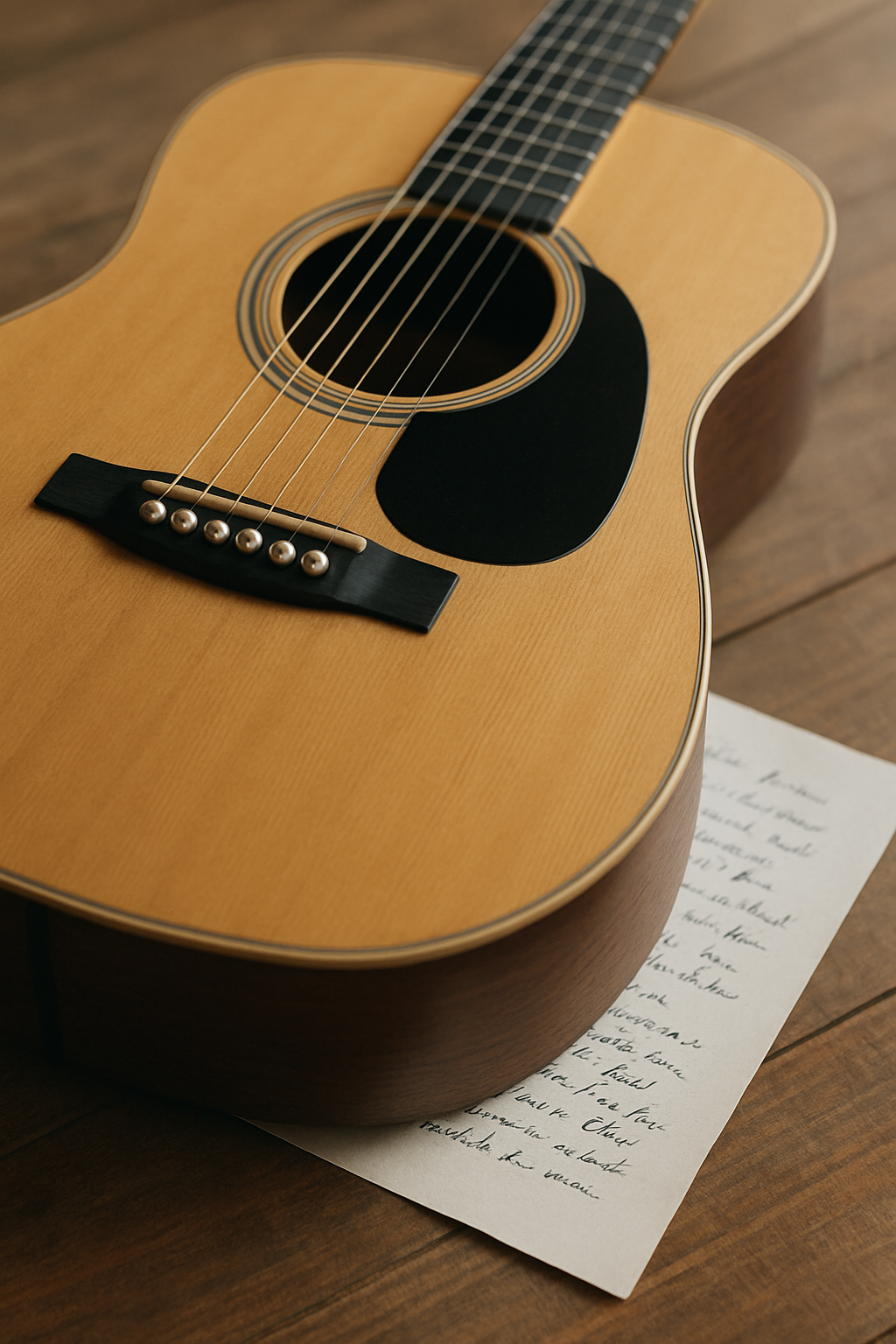
I don’t think I really knew what a bridge was until I was learning the guitar and my friend Mike would give me the lyrics to songs he was teaching me in long hand with his very neatly written “Verse” and “Chorus” and “Bridge.”
In a song, a bridge is usually a section that provides a temporary departure from the main melodic and harmonic structure.
We’ve heard them all our lives, even if we didn’t know what they’re called.
Below are some good examples of well-known bridges.
In Every Breath You Take:
Since you’ve gone I’ve been lost without a trace
I dream at night, I can only see your face
I look around but it’s you I can’t replace
I feel so cold and I long for your embrace
I keep cryin’, “Baby, baby, please”
In Somewhere Over the Rainbow:
Someday I’ll wish upon a star
And wake up where the clouds are far behind me
Where troubles melt like lemon drops
Away above the chimney tops, that’s where you’ll find me
In We Can Work It Out:
Life is very short, and there’s no time,
For fussing and fighting, my friend,
I have always thought that it’s a crime,
So I will ask you once again.
And in Country Roads:
I hear her voice in the mornin’ hour, she calls me
The radio reminds me of my home far away
Drivin’ down the road, I get a feelin’
That I should’ve been home yesterday, yesterday
Bridges in music often serve to introduce:
- Contrast: a shift in tone, rhythm, or chord structure
- Surprise: an unexpected melodic or lyrical twist
- Perspective: a new emotional or narrative angle or reflection or insight
- Suspension: musical tension that holds us before resolution
- Dissonance: emotional or harmonic instability that adds depth
- Resolution: the return to a familiar chorus or theme with greater weight or meaning
Contrast, Surprise, Perspective, Suspension, Dissonance and Resolution.
I love that list!
Here’s how those six words could translate into terms we can apply to our lives:
- Contrast: A period that looks or feels different than what came before — a new job, a breakup, a move, a mindset shift.
- Surprise: An unexpected moment that reshapes our understanding — meeting someone, losing something, realizing something.
- Perspective: A change in how we see ourselves, others, or the world — often brought on by reflection, therapy, spiritual insight, or time.
- Suspension: A season of waiting, uncertainty, or “in-between” — not knowing what’s next but knowing we’re not where we were.
- Dissonance: Inner conflict, tension, or discomfort — when our values, desires, or roles feel out of sync.
- Resolution: A return to clarity, peace, or direction — sometimes through action, sometimes through acceptance.
Life doesn’t move in clean verses and choruses. Bridge moments often come as interruptions simply because we get pulled, paused, or rerouted. The bridge is where we notice that.
I took some liberties with his words, but James Clear says something very close to this:
“Life presents an endless series of interruptions and distractions. You will continually be pulled off course.
When your day [or life!] is interrupted or your progress stalls, it’s easy for your mindset to collapse as well.
Everyone gets distracted.
In many ways, the real divide is between those who get back on track and those who let those interruptions expand.”
And I agree with him. Mostly. But I LOVE bridges in songs. Like really love them. (It’s probably the reason I love Taylor Swift! She is the queen of amazing bridges!) I think bridges are interesting and anchoring and not just something to avoid so we can get back on track. They can be useful. Yes, useful.
Here are my 4 reasons why:
- They interrupt the pattern. And sometimes lives have to rupture a little to be heard.
- They reveal an emotional core. We thought the chorus was the point, but the bridge shows us the heart of the matter.
- They create memory. We don’t always remember what’s repeated over and over — but we usually remember what changed.
- They move things forward. Even if they’re short, bridge moments have a direction in them — a sense of motion.
I can’t wait to hear about what your bridges are teaching you, and if you need someone to carefully write it out in long hand for you (literally!), I’m your gal.
.
.
.
.
.
.
.
PS If you liked this post – or any others, I’d love you to pass me and my work on to a friend. They can find out much more about me here if they’re interested!