

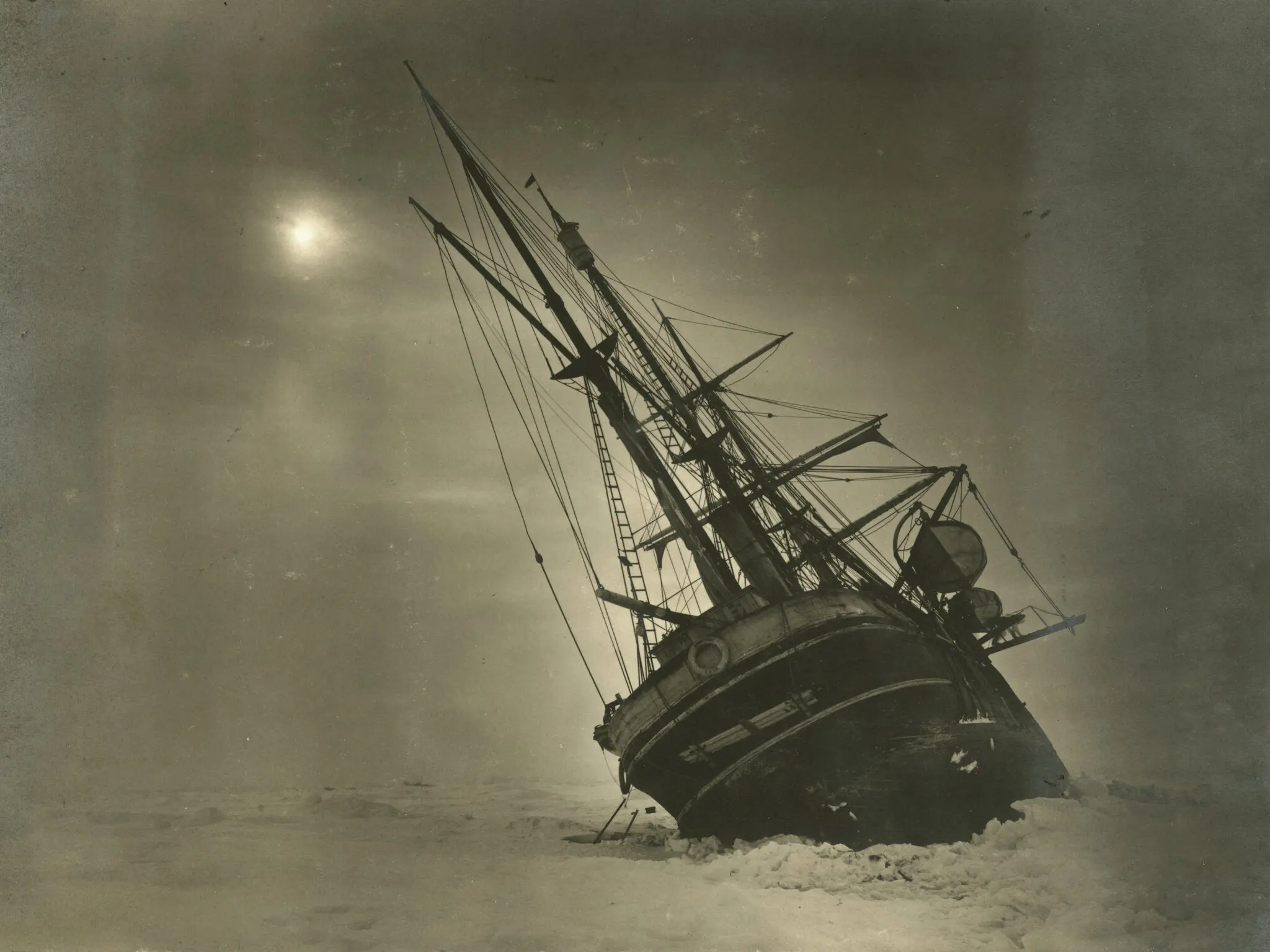
On March 9, 2022, the New York Times published this incredible news:
“The wreck of Endurance has been found in the Antarctic, 106 years after the historic ship was crushed in pack ice and sank during an expedition by the explorer Ernest Shackleton.
A team of adventurers, marine archaeologists and technicians located the wreck at the bottom of the Weddell Sea, east of the Antarctic Peninsula, using undersea drones. Battling sea ice and freezing temperatures, the team had been searching for more than two weeks in a 150-square-mile area around where the ship went down in 1915.
Endurance, a 144-foot, three-masted wooden ship, holds a revered place in polar history because it spawned one of the greatest survival stories in the annals of exploration. Its location, nearly 10,000 feet down in waters that are among the iciest on Earth, placed it among the most celebrated shipwrecks that had not been found.”
In another article a month prior, the paper introduced the search expedition and explained that “the Endurance was lost while transporting Shackleton and his crew of 27 to Antarctica…
The sinking, which came months after the ship first became trapped in pack ice, dashed those hopes but resulted in one of the greatest tales of survival in the face of great adversity.”
In 1914, when Ernest Shackleton set out to lead the Imperial Trans-Antarctic Expedition, the goal was to cross Antarctica on foot.
The ship, Endurance, never made it to land.
As mentioned above, it became trapped in pack ice, drifted for months and months, and was eventually engulfed by the ice and sunk. Shackleton and his crew were stranded on drifting ice floes in Antarctica with limited food, brutal cold, no ship, and no rescue plan.
Shackleton, a shining example of a resilient leader, quietly changed the definition of the mission.
According to Professor Nancy Koehn, Shackleton spent a huge amount of time and attention as the expedition leader on affecting the engagement, the outlook, and the cohesion of the crew.
He did this in several ways, but one of the most notable is this:
Every day, he required routines for his 27 men to follow:
- regular meals, even when food was scarce
- physical movement to keep their bodies from failing
- social rituals to keep morale steady
- strict sleep schedules
- constant scanning of the ice for the next viable move
According to Professor Koehn, he was “constantly thinking about how to keep his men engaged, focused on the positive, and working together.”
The conditions stayed awful. But he kept his team doing daily work anyway.
When the ice finally broke apart, Shackleton led his crew to Elephant Island. Then he and five others made a 16-day open-boat journey across the Southern Ocean to South Georgia Island — one of the most dangerous sea crossings in the world — to get help.
Every single man survived.
Shackleton returned to Britain a hero. He later said his real job wasn’t exploration — it was preserving life and momentum when forward progress looked impossible.
James Clear recently shared something he tries to remind himself:
- The strong mind finds a way to stay steady … even when plans fall apart.
- The strong body finds a way to train … even when the day doesn’t go your way.
- The strong relationship finds a way to reconnect … even when things get rough.
He goes on,
“Anyone can smile when life goes smoothly.
Anyone can train when they feel great.
Anyone can be kind when the relationship is easy.
It’s how you act when the situation isn’t optimal that makes the difference.”
It’s how you act when the situation isn’t optimal that makes the difference.
Ernest Shackleton continued to help his team by “ordering them to do things that would make them feel like they were doing productive, enjoyable, upward-looking things with their time and abilities.” (Koehn)
Every. Day.
That’s how he acted in a situation that was anything but optimal.
I can’t wait to hear about the ways you’re showing up – even when circumstances don’t cooperate. And if you need some ideas, I’m happy to share more of what I’ve learned from Ernest.
.
.
.
.
.
.
.
PS If you liked this post – or any others, I’d love you to pass me and my work on to a friend. They can find out much more about me here if they’re interested!