
I grew up in a very large family, surrounded by siblings. A LOT of them. There was a gaggle of us – to say the least. Everywhere we went, even in the 60s, 70s and 80s (when it was much more common to have larger families), we caused a bit of a spectacle.
My dad was a doctor. Not the ‘The doctor will see you now” doctor, but “Let’s get this to the lab” kind of doctor. Anything I say here will not do justice to his illustrative career, but suffice it to say, he was a pathologist, microbiologist, researcher, administrator and entrepreneur. Several universities, buildings, labs, businesses, organizations, and colleagues benefited from his work.
During our growing up years, he was in high demand for speaking and networking and he also had responsibilities in our church communities that put him in higher profile settings.
Often, we — the gaggle I mentioned earlier — were with him.
Which is how, I’m positive, he came up with this: Word One.
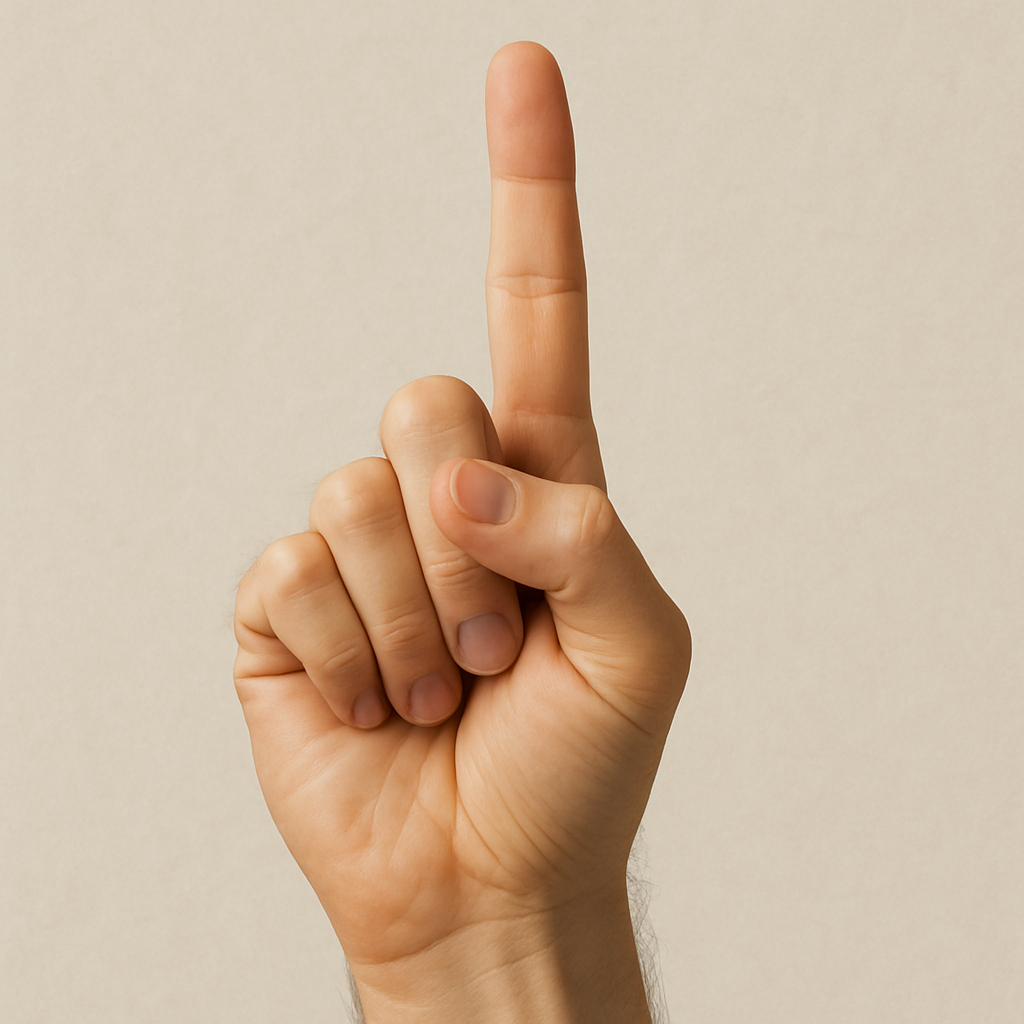
When he was about to enter a place with people — any people, really — and we were trailing behind him, he would hold up his index finger for all of us to see and with a stern look on his face slowly repeat this phrase: “Word One.”
That’s all it took for us to quiet down, stop chattering, pay attention to the physical space we were taking up — in the lobby, entrance, hallway, restaurant, etc. — and remember.
Word One.
What was Word One? It was the word my dad had drilled into us. The word we needed to abide by while out in the world. The word that ruled our collective actions.
Word One = Dignity.
Dad used the Word One code with our family for decades when he wanted decorum.
The Oxford Dictionary defines dignity as 1) The state or quality of being worthy of honor or respect and 2) A composed or serious manner or style.
My dad was definitely leaning into the second definition during my childhood, but lately, the first definition is getting a lot of air time. Yesterday, in fact, my brilliant friend Lisa shared The Dignity Index on our girlfriend group chat.
According to The Dignity Index website, “The Dignity Index scores distinct phrases along an eight-point scale from contempt to dignity. Lower scores (1-4) reflect divisive language while higher scores (5-8) reflect language grounded in dignity. … By focusing on the speech and not the speaker, The Dignity Index is designed to draw our attention away from … biases … and toward the power we each have to heal our country and each other.”
The eight levels are as follows:
Level one escalates from violent words to violent actions. It’s a combination of feeling the other side is less than human and calling for or approving violence.
Level two accuses the other side not just of doing bad or being bad, but promoting evil.
Level three attacks the other side’s moral character, not just their capabilities or competence.
Level four mocks and attacks the other side’s background, their beliefs, their commitment, their competence, their performance.
Level five listens to the other side’s point of view and respectfully explains their own goals, views, and plans.
Level six sees it as a welcome duty to work with the other side to find common ground and act on it.
Level seven wants to fully engage the other side – discussing the deepest disagreements they have to see what breakthroughs they can find.
Level eight [believes] I can see myself in every human being, I refuse to hate anyone, and I offer dignity to everyone.
My dad’s “Word One” was really his way of building a family dignity index long before this one existed. He expected us to carry ourselves with composure in public spaces: to remember that how we spoke, how we moved, and how we showed up reflected not just on us as individuals but on him and on everyone we represented.
Looking at The Dignity Index now, decades later, I can see how the same principle applies. Every word we choose has weight. Every exchange can either escalate us down toward contempt or move us up toward respect. In family rooms, board rooms, classrooms, and even group chats, our “score” shows up whether we realize it or not.
The beauty of the Index is that it puts the power back in our hands. We can’t control what others say, but we can always choose where we’re intending our own words to land. Do we want to diminish or dignify? Do we want to divide or connect?
Maybe the reminder my dad gave us works just as well for us today. Before we enter the room — before we send the text, type the comment, or raise the hand in the meeting — we can pause and remind ourselves: Word One.
I can’t wait to hear about how you’re figuring out ways to incorporate more dignity into your public and personal discourses and displays.
PS One time when my babiest of baby sisters was probably three, we were on our way somewhere and my dad said to her, “You remember what Word One is, right?” With a proud little look on her curly-blonde-hair-framed face, she said “Yes!” My dad said “What is it?” “LIBERTY!!” she yelled with a little raised fist. Ha Ha. Close enough.
PPS Finding out that The Dignity Index is the brainchild of an institute at the University of Utah, a place where my dad spent the last twenty years of his career, and that it is named after one of my dad’s close friends, was a sweet wink to me. Word One indeed.
.
.
.
.
.
.
.
PPPS If you liked this post – or any others, I’d love you to pass me and my work on to a friend. They can find out much more about me here if they’re interested!