
There is a magical store in Bozeman, Montana called Olivelle. Olivelle was started 20 years ago by a mom and daughter who started with a love of high quality olive oil and vinegar and kept expanding from there. They now offer over 150 of their own products and every time I go there, I leave with a slightly different appreciation.
My sister, sister-in-law, and I usually wander around the store looking at all the kitchen gear and gadgets while talking about which of their oils and vinegars we love, which ones we’re out of at home, which ones we need to stock up on, which ones we have recently discovered.
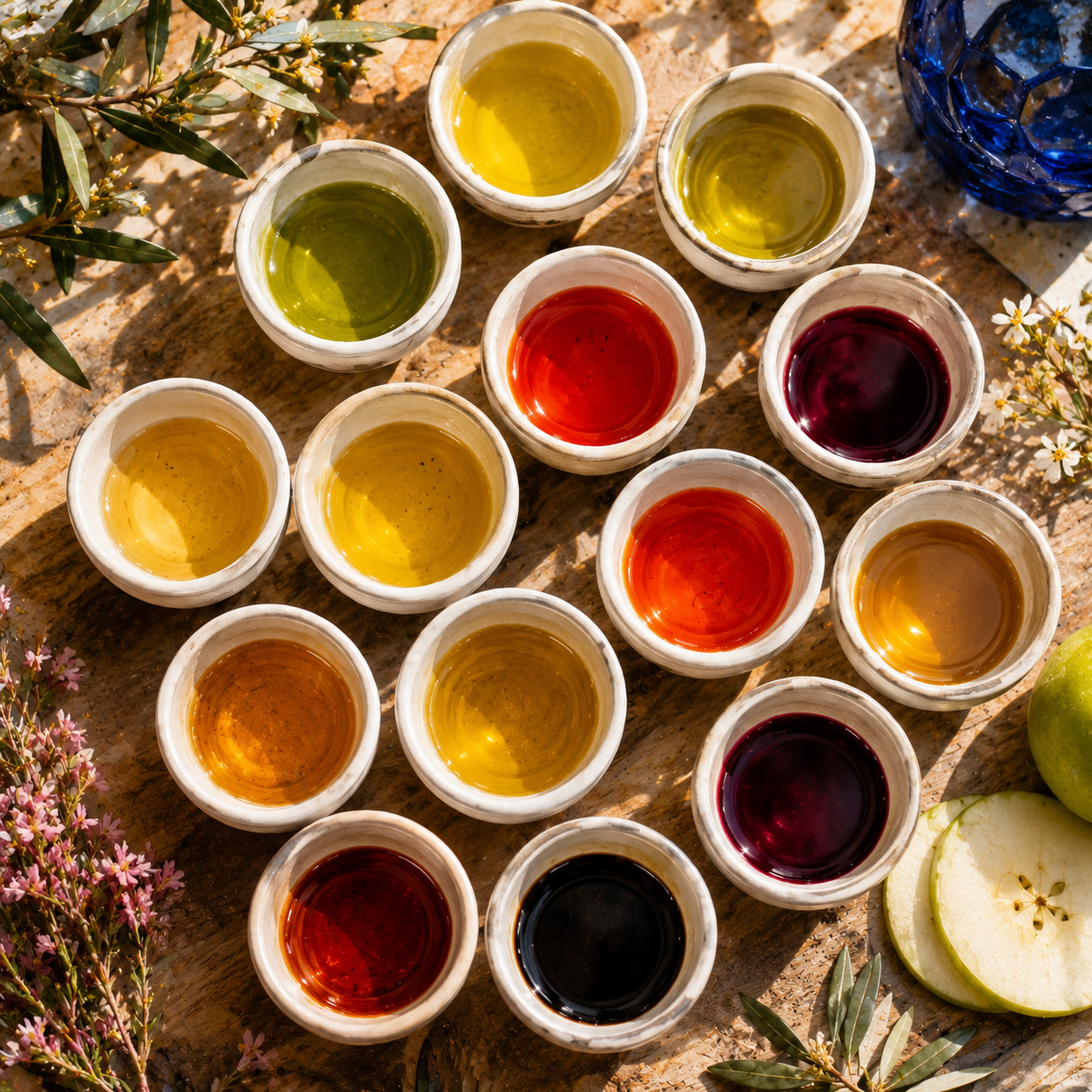
They make it fun at Olivelle. They have a huge wall of barrels and barrels of everything from Summer Peach Olive Oil to Caramelized Garlic Olive Oil and from Barrel Aged White Sweet Vinegar to Harvest Fig Balsamic Vinegar.
We usually spend a long time standing at the sampling station dipping bread into tiny cups of oils and vinegars.
Once you choose your flavor and your size of jar, they fill it and seal it for you on the spot. This last trip I came home with three of my favorite oils and vinegars and also a new addition – blood orange infused olive oil. So yummy. I also came home with one of my favorite bowl scrapers in a new color, two new plates for spring, and some tzatziki mix.
Professional olive oil tasting has become a serious field the world over. There are trained tasting panels, competitions, certifications, and judging systems. Experts evaluate oils for freshness, balance, texture, bitterness, fruitiness, and defects caused by poor storage or aging.
Some countries even require trained tasting panels before an oil can earn an “extra virgin” label. Judges taste dozens of oils in a single sitting, carefully resetting their palate between samples with water, green apple slices (who knew?), or plain bread.
But something I learned recently is that the tasters don’t actually ingest all the oils. With the amount of tasting they have to do, it would be too much. So they have ways of evaluating it without drinking it all.
One of the very best tools I have used with clients young and old is that our thoughts aren’t facts. I believe that so much that I even start most of my client notes with a section titled “Your brain is offering you thoughts that sound like….”
In this section I type out all the stories their brain is feeding them in as much detail as I’ve been able to capture. Seeing thoughts as a list on paper is a powerful way to decide if they are thoughts worth keeping. Our brains can sound surprisingly convincing until we slow down long enough to examine the pattern.
James Clear has such a good analogy for this. He says, “When you drink water from a cup, it becomes part of you. When water falls on you like rain, it evaporates a few minutes later.
Similarly, thoughts can be consumed or dismissed. Is this thought nourishing? Is this feeling something you should drink? Or is it more like getting caught in the rain?”
“You’ll always feel the rain,” he says, “but you don’t have to drink the rain. You can let the thought pass and in a few moments [or hours… or days…] the sun will return.”
Is it too cheesy to think of us as olive oil tasters with our thoughts? Maybe. But one thing I know for sure is that some thoughts do us good, and savoring them makes our lives better:
- A hard moment can still lead somewhere meaningful.
- There may be more than one explanation for this.
- I probably have more options here than I can currently see.
- One awkward conversation rarely defines a relationship.
- Rest could help me think more clearly about this tomorrow.
- I’ve handled unfamiliar things before.
- Somebody else’s mood may have very little to do with me.
- Small progress still changes things over time.
And some thoughts probably need to be spit out.
- They took longer to text back, so something must be wrong.
- Everybody else seems to know what they’re doing except me.
- If I can’t do it really well, there’s no point in starting.
- This mistake is going to follow me forever.
- If somebody feels hurt or disappointed, I need to fix it immediately.
- I should have this figured out by now.
- One unproductive day means I’m failing again.
- If I feel anxious about it, that probably means I shouldn’t do it.
I can’t wait to hear about the thoughts you’ve started tasting a little more carefully. And if you need help deciding which ones deserve your attention and energy, I’d love to work with you.
.
.
.
.
.
.
.
PS If you liked this post – or any others, I’d love you to pass me and my work on to a friend. They can find out much more about me here if they’re interested!