
Last winter, I had a day where I felt completely steady walking into something and completely unsteady walking out of it.
I was only about ten miles from my house.
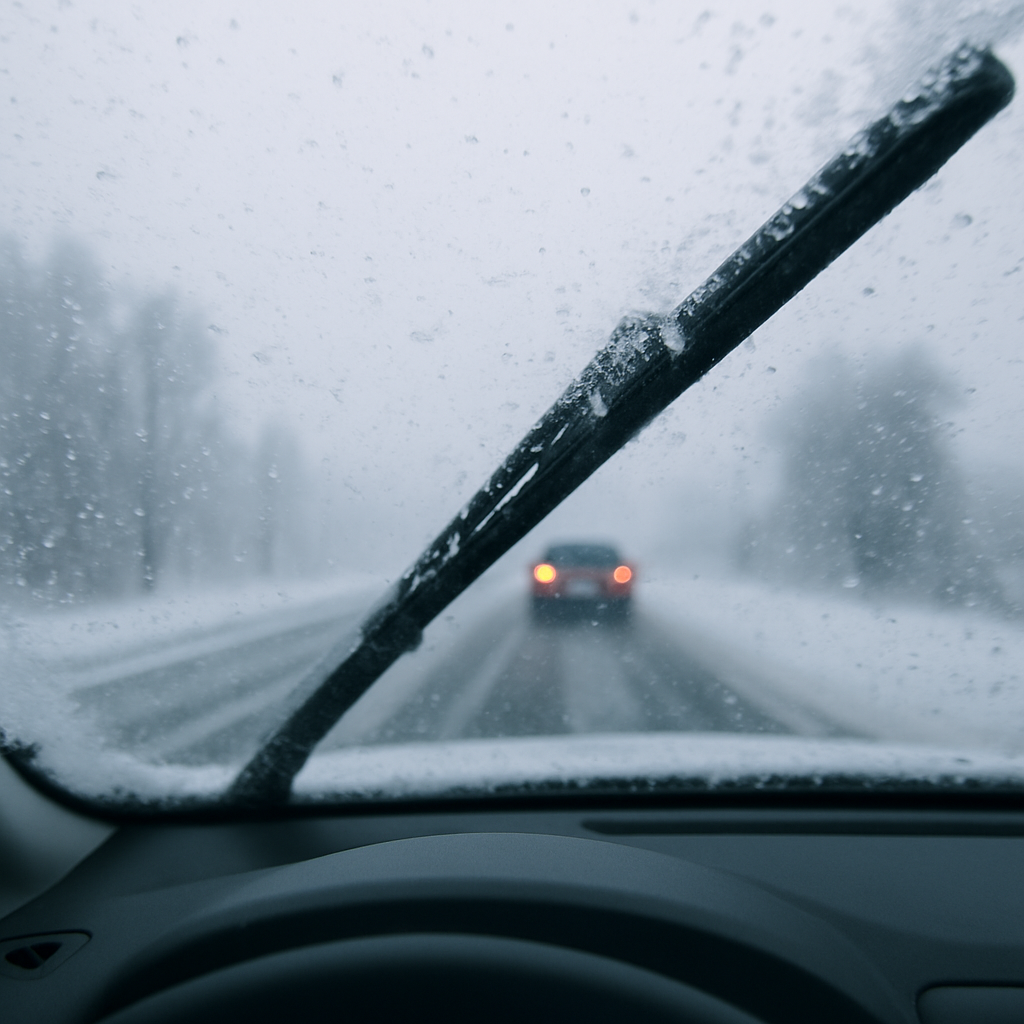
I went into a company on a beautiful crisp, clear morning to give an in-person presentation. I thought it went so well. But when I came out, a fast and furious snowstorm had started.
My only thought was getting home quick.
I started driving home the “usual” way around the mountain — on the freeway. I quickly saw cars sliding and slipping all over the place. My (fairly practiced) fear brain stepped in.
I have a great car for snow. I have years and years and years of practice driving in it. I could tell you some doozy stories about surviving in it.
And…
I still hate it.
Driving in snow + fear is just not a great combo.
So on this particular day, after watching cars slide up and down the freeway, I made the genius decision to go another way. I got off the freeway. I found a back street.
This back street was a one-lane road parallel with the freeway. It involved a long line of cars and a little drop-off — and very quickly it became obvious that this road felt even scarier. Tighter. Not as many escape routes. People were really struggling to maneuver their vehicles in this sudden dump of February snow.
I said a little prayer and then I called Darren. He was at home and calm, and through my panic I asked if he thought I should turn around and choose another route.
He said this: “I’m not with you. I can’t see what you’re seeing. You’re going to have to make the best decision you can. And I’m right here. You’re going to be ok. Call me back if you need to. I’ll see you at home.”
So I took a really deep breath. Said another prayer. And decided to trust myself.
I turned around and, again, got off the road I was on. I drove many miles west, away from the mountain, and found another way.
I did end up getting home safely — about two (driving at a crawl) hours later.
I’ve thought about that day so many times since. I’ve caught myself re-running the decisions I made with information I only had after the storm passed.
If I had stayed on the freeway, I probably would have outrun the worst of it.
If I had pulled over somewhere safe and waited thirty minutes, the plows would have cleared a path.
If I had calmed down sooner, maybe that first back road wouldn’t have felt so tight.
All of that is true in hindsight.
None of it was available in the moment.
The version of me who was actually out there — hands tight on the steering wheel, watching brake lights fishtail, trying to pick the safest option minute by minute — did the best she could with what she could see.
That’s the thing about fear. It narrows the frame. It changes the picture.
It’s so easy to judge the self who lived through something from the comfort of the self who already knows how it turned out.
We confuse clarity with correctness.
And we forget how little we could see at the time.
Psychologist Daniel Kahneman once wrote that hindsight creates an illusion of understanding. We look back and feel certain that a different choice would have been obvious, even though it wasn’t obvious in real time. He calls it “the sense-making instinct” — our brain trying to create a tidy narrative around something that felt murky while we were inside it.
If, like me, you’d like to practice a little compassion for the earlier version of you who was “doing the driving,” here are three things you can try:
1. Name the conditions you were in.
Before judging a past choice, pause and acknowledge what the moment actually held: exhaustion, fear, limited visibility, pressure, urgency, hope, uncertainty, longing, or lack of information.
Naming the conditions helps you see why your earlier self chose what they chose.
2. Separate hindsight from reality.
When you catch yourself replaying a situation, add a sentence like: “I didn’t know then what I know now.”
It breaks the illusion that clarity was available earlier.
3. Identify the skill you were using.
Even imperfect decisions usually reveal something strong — discernment, caution, problem-solving, self-protection, persistence, openness, adaptability, courage.
Spotting that strength shifts the focus from critique to compassion.
The me who kept inching forward in a storm, turning around when something felt off, trying again and again until home came back into view made the choices she thought would keep her safe. It was the best she could do in the moment.
I can’t wait to see what clarity emerges for you when you honor the version of yourself who was actually doing the driving. And if you want a thinking partner, I’m right here.
.
.
.
.
.
.
.
PS If you liked this post – or any others, I’d love you to pass me and my work on to a friend. They can find out much more about me here if they’re interested!